Paint Protection Film has come a long way from being just a clear layer over your vehicle’s paint. Today, PPF is available in several finishes, allowing drivers to protect their paint while keeping the factory appearance or completely changing the vehicle’s style.
From nearly invisible gloss PPF to matte, satin, colored, and specialty finishes, the right option depends on the look you want and how you use your vehicle.
This guide explains the most common types of PPF finishes, their differences, and how to choose the right Paint Protection Film for your car.
What Is Paint Protection Film?
Paint Protection Film (PPF) is a transparent or colored urethane film installed over painted vehicle surfaces to help protect them from everyday damage.
Quality PPF can help defend against:
- Rock chips
- Road debris
- Minor scratches
- Bug splatter
- Bird droppings
- Road grime
- Environmental contamination
Many modern films also feature self-healing top coats that can reduce the appearance of light surface marks when exposed to heat.
Different Types of PPF Finishes at a Glance
| PPF Finish | Appearance | Best For |
|---|---|---|
| Clear Gloss PPF | Shiny and nearly invisible | Preserving factory paint |
| Matte PPF | Flat, non-reflective appearance | Bold matte styling |
| Satin PPF | Soft, smooth sheen | Premium understated look |
| Colored PPF | Changes vehicle color | Protection + customization |
| Black PPF | Gloss, satin, or matte black | Roofs, accents, full-body changes |
| Specialty/Textured PPF | Unique visual effects | Custom styling |
1. Clear Gloss PPF
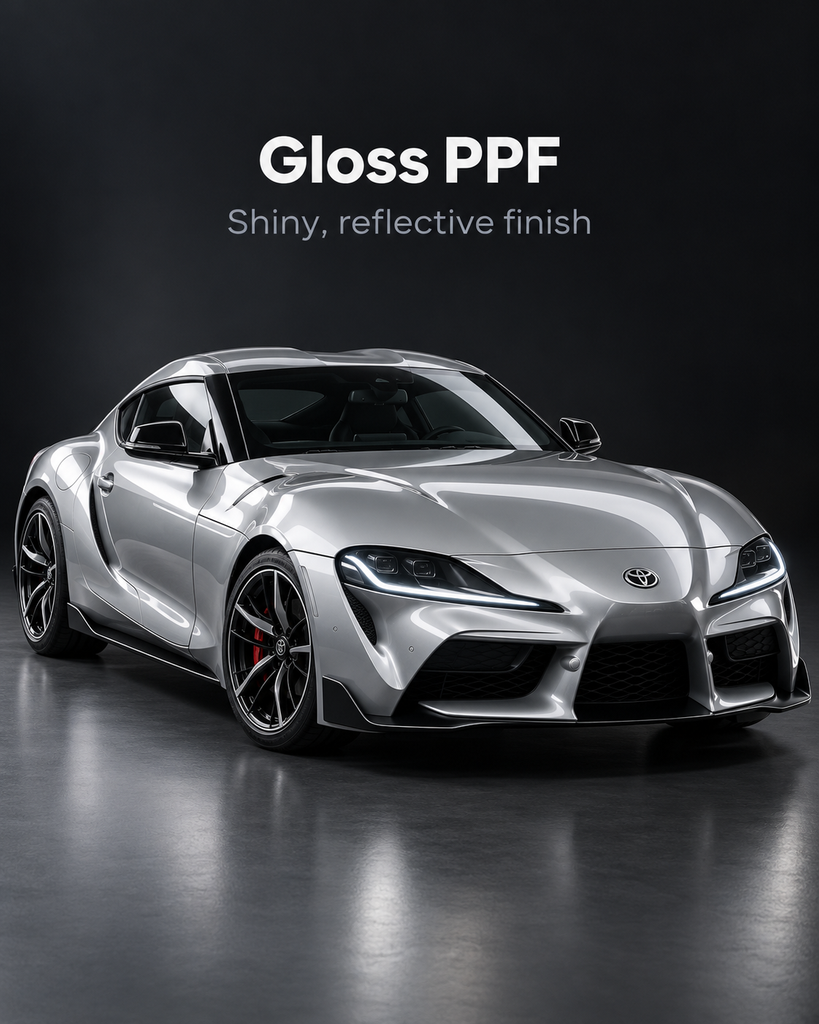
Clear gloss PPF is the most traditional and widely used option.
It is designed to protect the paint while maintaining the vehicle’s original color and glossy appearance.
It is especially popular on:
- Front bumpers
- Hoods
- Fenders
- Side mirrors
- Rocker panels
- Full vehicles
Why Choose Gloss PPF?
Clear gloss film is ideal if you love the factory paint and simply want to protect it.
It can also enhance the appearance of well-prepared paint by creating a smooth, glossy finish.
For drivers wanting protection without dramatically changing how their vehicle looks, gloss PPF is usually the natural choice.
2. Matte PPF
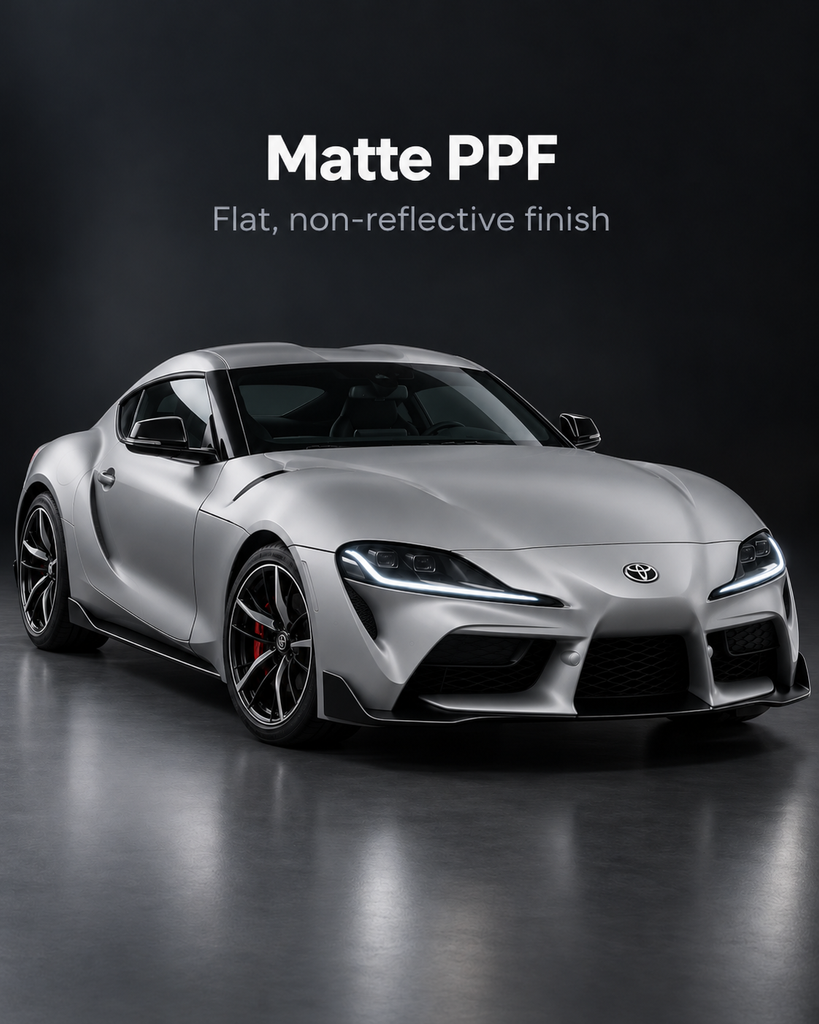
Matte PPF creates a flat, non-gloss appearance while still adding physical protection over the paint.
When installed over glossy factory paint, matte film can dramatically change the vehicle’s appearance without permanently repainting it.
It works particularly well for drivers who want:
- A more aggressive look
- Minimal reflections
- Unique styling
- Paint protection combined with appearance customization
Matte finishes require proper maintenance because polishing them like traditional glossy paint can alter the appearance.
3. Satin PPF
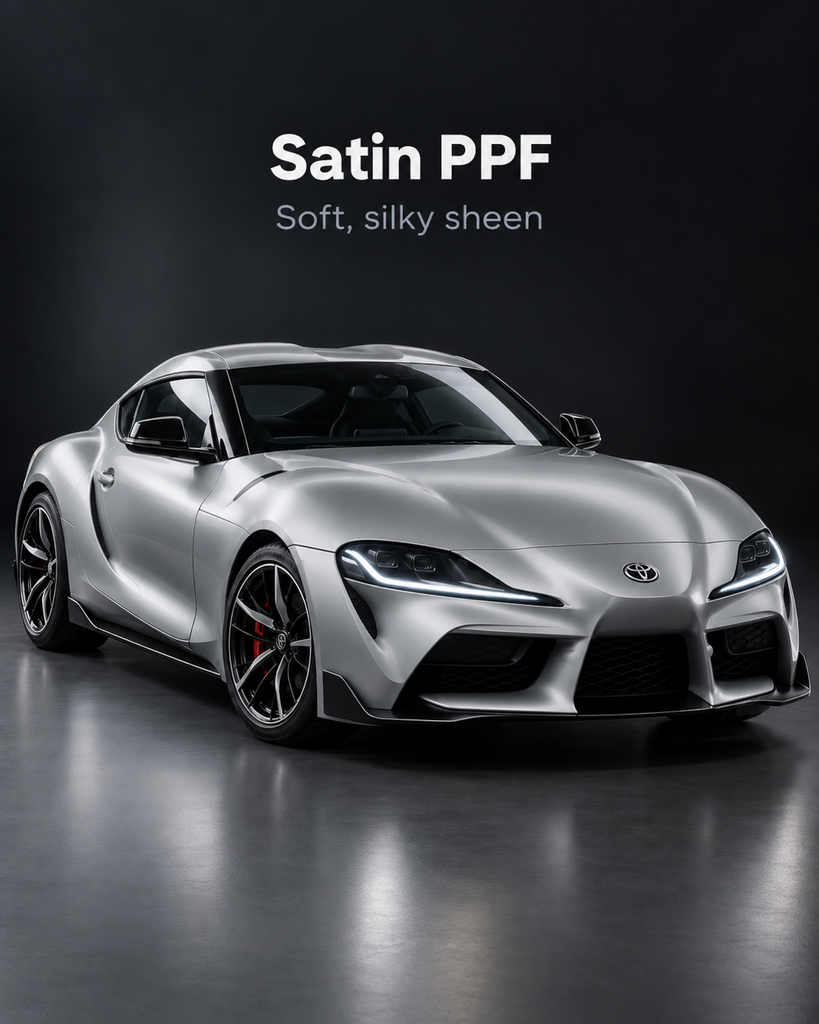
Satin PPF falls between gloss and matte.
Rather than having a completely flat surface, satin film creates a subtle sheen that responds softly to light.
This finish has become popular on luxury and performance vehicles because it can create a refined, factory-inspired appearance.
Matte vs Satin PPF
Matte typically produces a flatter finish, while satin retains slightly more reflection and depth.
If you want something understated but not completely flat, satin PPF may be the better choice.
4. Colored PPF
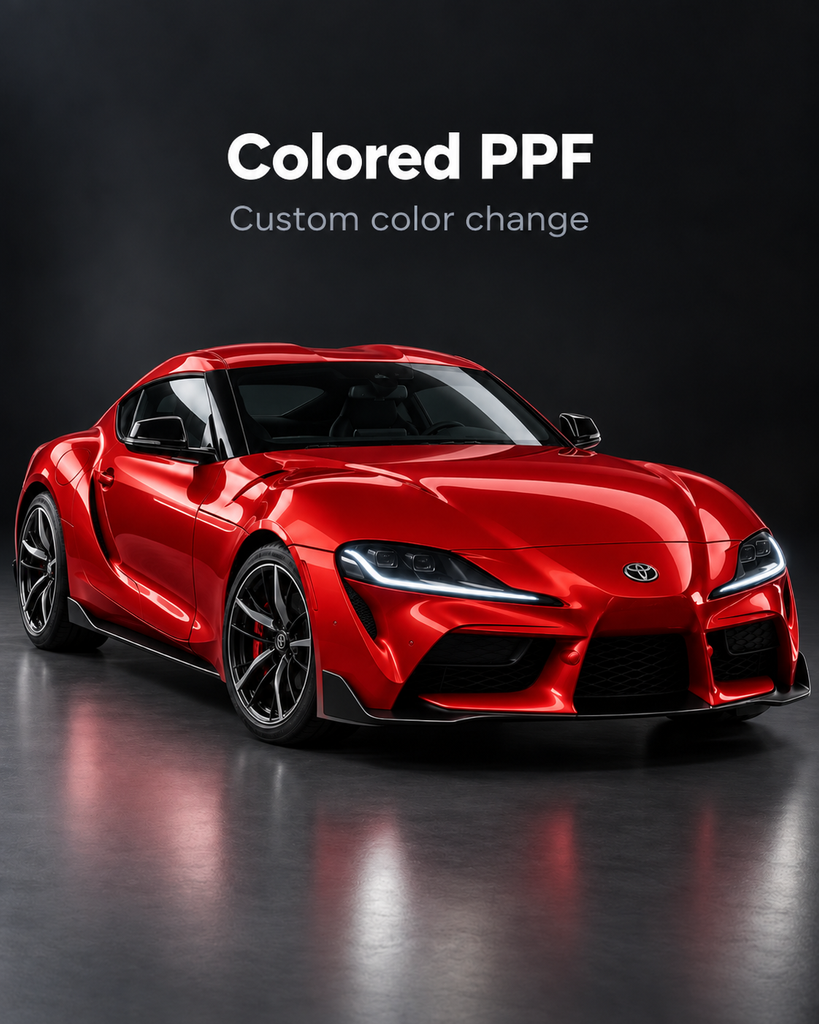
Colored Paint Protection Film combines vehicle customization with the protective properties of PPF.
Instead of covering your vehicle with clear film, colored PPF can transform the appearance while helping protect the original surface underneath.
Depending on the film manufacturer, colors may include:
- Black
- White
- Gray
- Red
- Blue
- Green
- Metallic shades
- Specialty colors
Colored PPF is especially attractive for owners who want a new look but still prioritize paint protection.
5. Black PPF
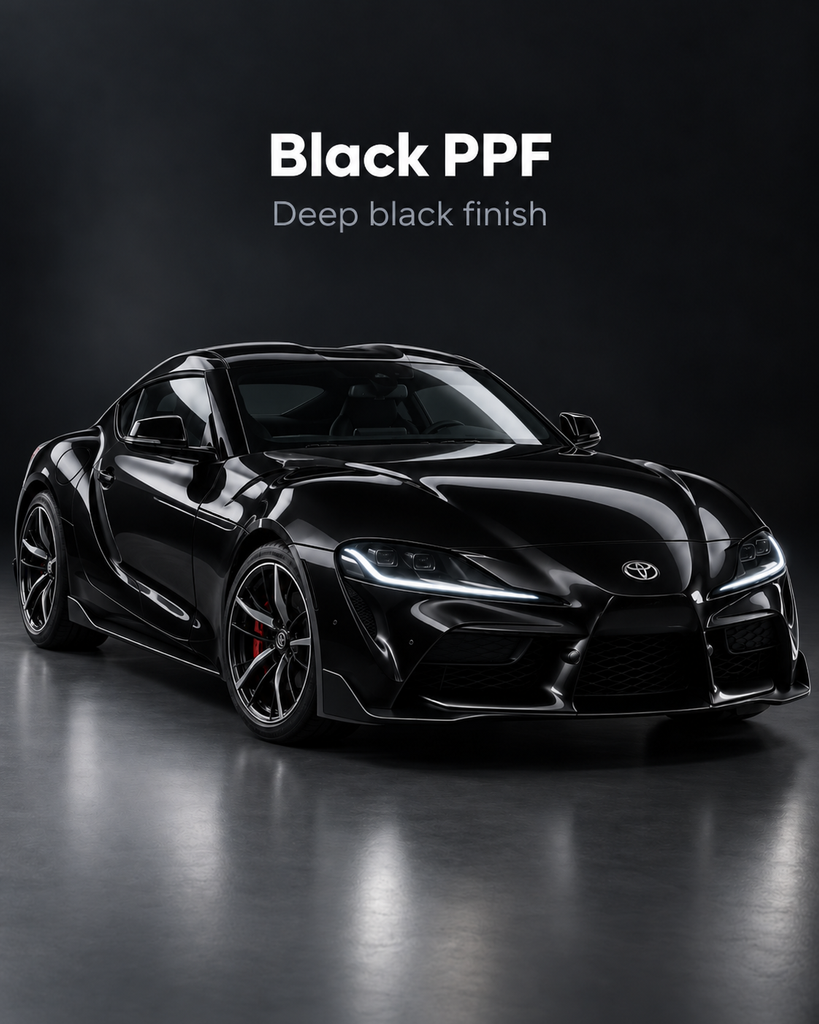
Black PPF deserves its own category because it is commonly used for both complete color changes and accents.
It may be available in:
- Gloss black
- Satin black
- Matte black
Black PPF can be used on the entire vehicle or selected areas such as:
- Roof
- Hood
- Mirrors
- Trim
- Spoilers
It provides a styling effect similar to black vinyl wrapping while offering the thicker protective characteristics associated with PPF.
6. Specialty and Textured PPF
Some Paint Protection Films are designed specifically for drivers who want something different from traditional finishes.
Depending on available product lines, specialty PPF may include visual effects such as:
- Carbon-inspired textures
- Forged-carbon appearance
- Metallic finishes
- Color-shifting effects
- Unique patterns
Availability varies by manufacturer, so it is best to discuss current film options with your PPF installer.
Gloss vs Matte vs Satin PPF
These three finishes can protect the same vehicle while creating very different appearances.
| Feature | Gloss PPF | Satin PPF | Matte PPF |
|---|---|---|---|
| Shine | High | Moderate | Very Low |
| Factory-like appearance | Excellent | Depends on vehicle | Less traditional |
| Paint color visibility | Full | Slightly softened | Flattened appearance |
| Custom styling | Subtle | Strong | Strong |
| Easy visual match to glossy paint | Yes | No | No |
| Ideal for full-body transformation | Yes | Yes | Yes |
Your choice mostly comes down to whether you want to preserve, soften, or completely transform the appearance of your paint.
Can PPF Change the Look of Factory Paint?
Yes.
PPF does not have to be invisible.
Installing matte or satin film over glossy paint can create a completely different finish while retaining the original paint underneath.
Colored PPF goes even further by changing both the color and finish.
That makes modern PPF attractive to owners who want both style and protection in one installation.
Can Different PPF Finishes Be Combined?
Yes, depending on the vehicle and design.
For example, you might use:
- Gloss PPF on the body
- Satin PPF on selected panels
- Black PPF on the roof
- Clear PPF on high-impact areas
However, combining finishes should be planned carefully so the finished vehicle looks intentional and balanced.
Professional installation makes a major difference here.
Which PPF Finish Is Best for Your Vehicle?
There is no single best finish for every car.
Choose based on your priorities.
Choose Clear Gloss PPF If:
You want to preserve your original paint color and factory gloss while adding strong protection.
Choose Matte PPF If:
You want a dramatic, flat appearance without permanently changing the paint.
Choose Satin PPF If:
You prefer a softer, premium finish with more depth than matte.
Choose Colored PPF If:
You want to change the appearance of your vehicle while adding PPF protection at the same time.
Does the Finish Affect PPF Protection?
The appearance may change, but quality PPF is primarily designed around its protective film structure.
Performance can vary by film manufacturer and product line, so do not choose based only on whether the film is gloss, matte, or colored.
Also consider:
- Film thickness
- Self-healing technology
- UV resistance
- Stain resistance
- Manufacturer warranty
- Installation quality
A premium film installed poorly can still produce disappointing results, which is why choosing an experienced installer matters.
Full-Body PPF or Partial PPF?
Your PPF finish can also influence how much of the vehicle you want covered.
Partial PPF
Common high-impact areas include:
- Front bumper
- Hood
- Front fenders
- Mirrors
This is ideal when protection is your main goal.
Full-Body PPF
Full coverage protects more painted surfaces and is especially useful when choosing matte, satin, or colored PPF because the finish stays consistent across the vehicle.
How Should Different PPF Finishes Be Maintained?
Regardless of finish, proper maintenance helps preserve the film.
Good habits include:
- Wash regularly with PPF-safe products.
- Avoid aggressive brushes.
- Remove bird droppings and bugs promptly.
- Use soft microfiber towels.
- Avoid harsh chemicals unless approved for the film.
- Follow the installer and film manufacturer’s maintenance instructions.
Matte and satin finishes may require specialized products because traditional polishing can change their appearance.
Frequently Asked Questions
What Is the Most Popular PPF Finish?
Clear gloss PPF remains one of the most common options because it protects factory paint without dramatically changing its appearance.
Is Matte PPF the Same as Matte Vinyl Wrap?
No. Both can create a matte look, but they are different materials designed for different purposes. PPF is generally thicker and primarily engineered for paint protection.
Can I Put Matte PPF Over Gloss Paint?
Yes. Matte PPF can transform glossy paint into a matte appearance while keeping the original finish underneath.
Does Colored PPF Protect Like Clear PPF?
Quality colored PPF is designed to provide paint protection along with a color change, although specifications vary between products and manufacturers.
Can PPF Protect Against Rock Chips?
Yes. One of the primary reasons for installing PPF is to help protect vulnerable painted surfaces from road debris and rock chips.
Is PPF Completely Scratch-Proof?
No protective film makes a vehicle completely damage-proof. PPF is designed to reduce damage from many common impacts and abrasions, while certain films can self-heal light surface marks.
Professional PPF Installation in Stafford, VA
Choosing the right PPF finish is about more than deciding between gloss, matte, or satin. Film quality, surface preparation, coverage, panel alignment, edge finishing, and installer experience all influence the final result.
For professional Paint Protection Film installation in Stafford, VA, trust Keen Eyes Auto Detailing. Serving Stafford and nearby areas, their experienced team can help you choose the right PPF coverage and finish for your vehicle, whether your priority is protecting factory paint, preventing rock chips, or creating a more distinctive appearance. Professional installation helps ensure cleaner edges, consistent coverage, and long-lasting protection for your vehicle.