Paint Protection Film (PPF) is one of the best ways to protect your vehicle’s paint from rock chips, road debris, scratches, bug splatter, and everyday driving damage. But once PPF is installed, does washing your car require a different approach?
Yes, a little extra care makes a big difference.
You can wash your vehicle just like before, but using the correct products and techniques will help keep your paint protection film clean, clear, and looking its best. Whether your vehicle has partial or full-body PPF, here is how to wash it safely without damaging the film.
Can You Wash a Car With Paint Protection Film?
Absolutely! You can wash a vehicle with PPF installed. In fact, regular washing is important because dirt, road grime, bird droppings, bug splatter, and other contaminants can build up on the film.
However, PPF needs proper maintenance. Aggressive washing, harsh chemicals, dirty wash mitts, and excessive pressure around film edges can cause scratches, staining, or lifting.
The safest approach is a gentle hand wash using automotive-safe soap, clean microfiber materials, and proper drying techniques.
How to Properly Wash a Car With PPF Installed
Follow these steps to keep your paint protection film in excellent condition.
1. Let the PPF Cure Before Washing
If your vehicle has just received a PPF installation, avoid washing it immediately.
Most manufacturers recommend waiting approximately 48–72 hours before the first wash, depending on the film and installation conditions.
During this time, the adhesive needs to settle and bond properly to the vehicle’s paint.
Important: Always follow your installer’s aftercare instructions. Some films require additional precautions during the first week.
2. Rinse Away Loose Dirt and Debris
Before touching the vehicle, rinse the exterior with clean water to remove loose dirt, dust, and road debris.
This reduces the chance of dragging abrasive particles across the film during washing.
If you’re using a pressure washer:
- Use a wide spray pattern.
- Keep the nozzle at a safe distance.
- Avoid directing water toward film edges, seams, or corners.
- Never use aggressive pressure to remove stubborn dirt.
The goal is to remove loose contamination without compromising the film’s edges.
3. Use a PPF-Safe Car Shampoo
Choose a quality automotive shampoo that is compatible with your particular PPF.
A gentle, pH-neutral car shampoo is generally a good choice. Avoid dish soap, abrasive cleaners, strong solvents, and unapproved chemical products.
Using the right shampoo helps remove dirt without unnecessarily affecting the film’s finish or any compatible protective coating applied over it.
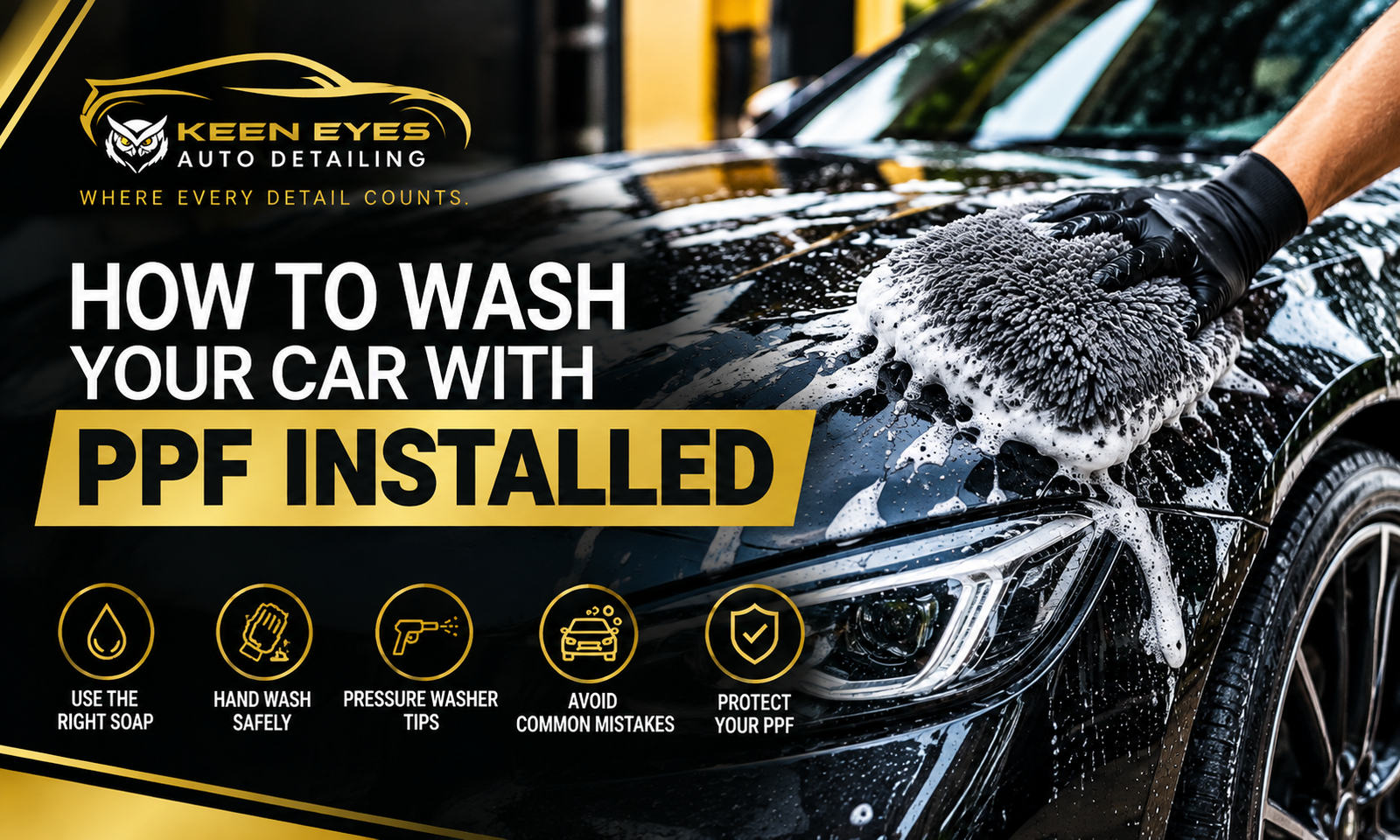
4. Use the Two-Bucket Hand-Washing Method
Hand washing is one of the safest ways to maintain PPF.
Use:
- One bucket containing clean water and car shampoo.
- A second bucket containing clean rinse water.
- A soft, clean microfiber wash mitt.
Wash one section at a time using light pressure and straight-line movements. Rinse the mitt frequently before returning it to the soap bucket.
This helps prevent dirt and grit from being transferred back onto the film.
5. Pay Attention to Film Edges
This is one of the most important parts of PPF maintenance.
Paint protection film has edges and seams where it meets the vehicle’s original paint. Directing high-pressure water into these areas can weaken adhesion and cause lifting or peeling.
Avoid:
- Spraying directly underneath film edges.
- Scrubbing aggressively around seams.
- Picking at lifted corners.
- Using hard brushes or abrasive cleaning tools.
If you notice lifting, bubbling, or peeling, contact your PPF installer rather than trying to repair it yourself.
6. Rinse Thoroughly and Dry With Microfiber
After washing, rinse away all remaining soap and dirt.
Use a clean, plush microfiber drying towel or an appropriate car-drying blower to remove excess water.
Do not let the vehicle air-dry in direct sunlight. Mineral deposits from water can leave spots on the film, especially in areas with hard water.
Dry gently without applying unnecessary pressure.
Can You Use an Automatic Car Wash With PPF?
You can, but not every automatic car wash is suitable for paint protection film.
Brush-style automatic car washes are best avoided.
Rotating brushes and abrasive cleaning materials can introduce scratches, dull the film’s appearance, and potentially catch or lift film edges.
A touchless car wash is generally a better alternative when hand washing isn’t possible. However, some touchless washes use strong detergents, so check that their chemicals are compatible with your film.
For the best long-term results, hand washing remains our preferred recommendation.
Can You Pressure Wash a Car With PPF?
Yes, but you need to be careful.
A pressure washer can help remove loose dirt and road grime, but excessive pressure or incorrect spraying angles can force water underneath the film.
Follow these precautions:
- Use a wide-angle nozzle rather than a narrow, concentrated stream.
- Maintain a safe distance from the film.
- Never aim directly at edges, seams, or lifted areas.
- Avoid aggressive pressure and prolonged spraying in one spot.
- Follow the specific pressure and distance limits provided by your film manufacturer.
If you’re unsure, use a regular garden hose and gentle hand washing instead.
What Products Should You Avoid on PPF?
Not every car cleaning product is designed for paint protection film.
| Product or Method | Recommendation |
|---|---|
| PPF-compatible car shampoo | Recommended |
| Clean microfiber wash mitt | Recommended |
| Plush microfiber drying towel | Recommended |
| Abrasive cleaning pads | Avoid |
| Dishwashing liquid | Avoid |
| Harsh chemicals and solvents | Avoid unless specifically approved |
| Brush-style automatic car washes | Avoid |
| High-pressure water aimed at film edges | Avoid |
| PPF-compatible ceramic maintenance spray | Use according to manufacturer instructions |
Always check your film manufacturer’s approved product list before applying waxes, sealants, or other chemicals.
How Often Should You Wash a Car With PPF?
For most vehicles, washing every one to two weeks is a reasonable starting point.
However, your washing schedule depends on how frequently you drive, where you park, and the conditions your vehicle encounters.
You may need more frequent cleaning if your vehicle is exposed to:
- Highway driving and road debris.
- Bird droppings and insect splatter.
- Tree sap and pollen.
- Construction dust and dirt roads.
- Road salt and other environmental contaminants.
Do not allow bird droppings, bug residue, or tree sap to sit on the film for extended periods. Remove them promptly using a manufacturer-approved cleaning method.
Does Ceramic Coating Help Protect PPF?
Yes. A PPF-compatible ceramic coating can provide an additional layer of surface protection.
When properly applied, it can:
- Improve water beading and water repellency.
- Make routine washing easier.
- Help reduce contamination buildup.
- Enhance gloss on compatible glossy films.
- Make ongoing maintenance more convenient.
However, ceramic coating does not replace PPF. PPF provides a physical barrier against road debris and rock chips, while ceramic coating primarily improves surface protection and maintenance.
Make sure the coating is compatible with your specific film, especially if your vehicle has matte or satin PPF.
Common PPF Washing Mistakes to Avoid
Even high-quality paint protection film can be damaged by improper maintenance.
Avoid these common mistakes:
- Washing too soon after installation: Give the adhesive enough time to settle.
- Using dirty microfiber towels: Trapped dirt can scratch the film.
- Using brush-style car washes: Brushes can scratch the surface and catch film edges.
- Pressure washing too closely: Excessive pressure can cause lifting.
- Ignoring bird droppings and bug splatter: These contaminants can stain the film.
- Using harsh chemicals: Unapproved products may damage the film’s finish.
- Allowing water to dry on the vehicle: Mineral deposits can leave water spots.
A little extra attention during every wash can help preserve the appearance and performance of your PPF.
Protect Your Investment With Professional PPF Care at Keen Eyes Auto Detailing
Paint Protection Film is an investment in your vehicle’s appearance and long-term paint protection. Proper installation and maintenance both play an important role in getting the most from it.
At Keen Eyes Auto Detailing, we provide professional paint protection and automotive detailing services with a focus on precision, quality workmanship, and attention to detail.
We serve vehicle owners in Stafford, Fredericksburg, and Woodbridge, VA, helping keep their vehicles looking their best.
Whether you’re considering PPF installation or need professional detailing to maintain your vehicle, our team is ready to help.
Where Every Detail Counts.
Visit Keen Eyes Auto Detailing to learn more about our Paint Protection Film Services and give your vehicle the protection it deserves.
Frequently Asked Questions About Washing Cars With PPF
Can I wash my car normally after PPF installation?
Yes. Once the film has properly cured, you can wash your vehicle normally using gentle hand-washing techniques, PPF-compatible shampoo, and clean microfiber materials.
How long should I wait before washing my car after PPF installation?
Most manufacturers recommend waiting 48–72 hours. Always follow the specific instructions provided by your installer and film manufacturer.
Is hand washing better than an automatic car wash for PPF?
Yes. Hand washing provides better control and reduces the risk of scratches and lifted film edges. Touchless washes are a better alternative to brush-style washes when necessary.
Can a pressure washer damage paint protection film?
Yes. Excessive pressure, narrow spray patterns, and spraying directly at film edges can cause lifting or damage. Always follow manufacturer guidelines.
Can I use regular car soap on PPF?
Use a quality automotive shampoo that is compatible with your film. Avoid dish soap, harsh detergents, abrasive cleaners, and unapproved chemicals.
Does PPF need special maintenance?
PPF does not require complicated maintenance, but regular washing, prompt removal of contaminants, gentle drying, and periodic inspection help maintain its appearance.
Can I apply ceramic coating over PPF?
Yes, provided the ceramic coating is designed to be compatible with your specific film. Professional application can help improve gloss and make routine cleaning easier.
How often should I wash a PPF-protected vehicle?
Every one to two weeks is a reasonable starting point. Vehicles exposed to heavy road grime, insects, tree sap, and environmental contaminants may need more frequent cleaning.
Ready to protect your vehicle’s finish?
Contact Keen Eyes Auto Detailing to learn more about professional paint protection film, ceramic coating, and detailing services in Stafford, Fredericksburg, and Woodbridge, VA.