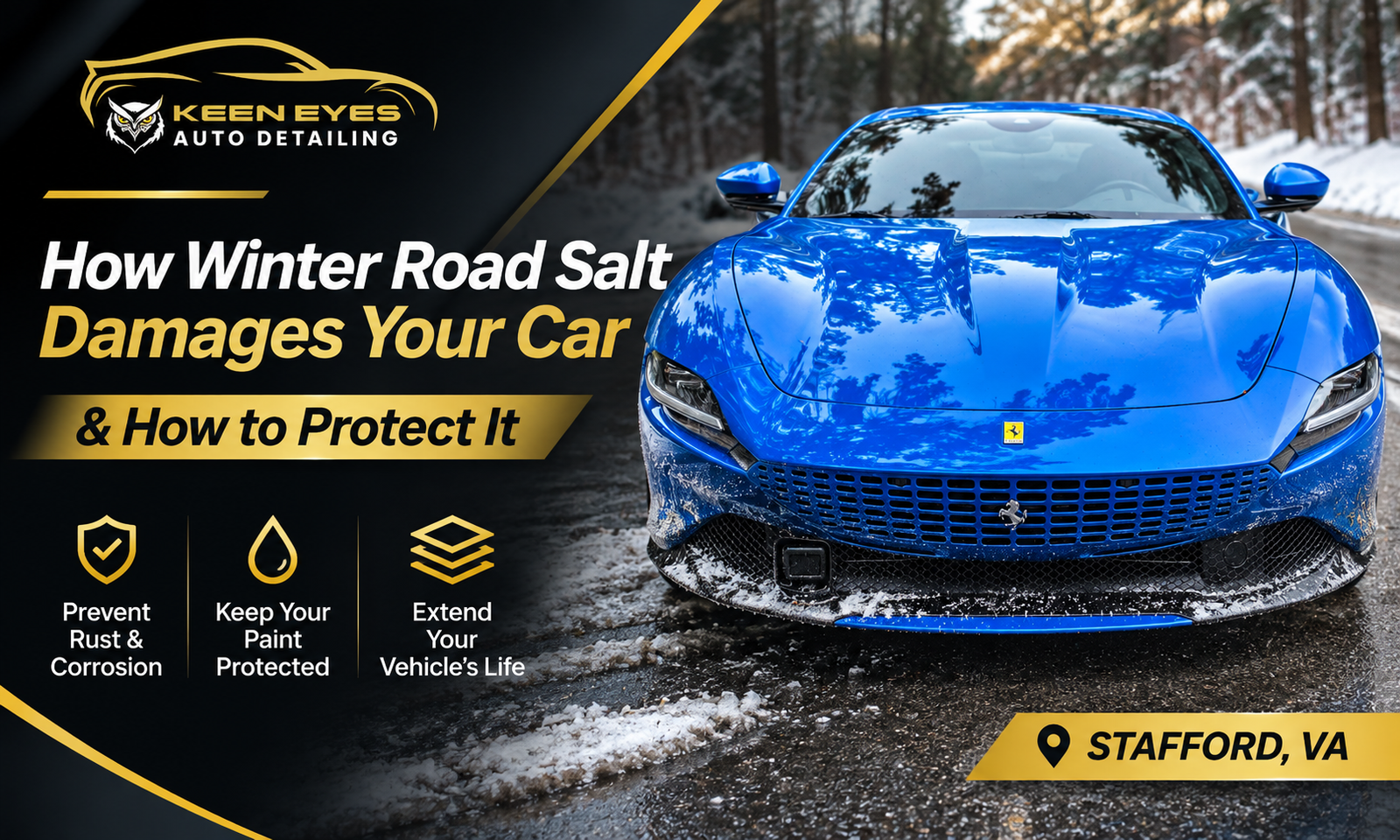
Winter driving in Stafford, VA, can be tough on your vehicle. Snow, ice, freezing temperatures, and road treatments create conditions that can affect your car’s exterior and undercarriage. While road salt helps make winter roads safer, it can also accelerate rust and corrosion when it remains on your vehicle.
The problem is that salt damage isn’t always immediately visible. It can build up around wheel wells, underneath the vehicle, and along lower body panels.
The good news is that regular washing and proper paint protection can help reduce winter damage. Here is what Stafford drivers should know about protecting their vehicles during the colder months.
Why Is Road Salt Bad for Your Car?
Road salt is commonly used to melt ice and improve traction during winter weather. When salt mixes with water, snow, and road grime, it creates a corrosive mixture that can stick to your vehicle.
Over time, this salty moisture can accelerate corrosion, particularly on exposed metal and areas where factory coatings or paint have been damaged.
Road salt can affect several parts of your vehicle:
- Undercarriage: Salt buildup can accelerate corrosion on exposed metal components.
- Wheel Wells: These areas collect salty slush, dirt, and debris.
- Brake Components: Prolonged exposure can contribute to corrosion on brake lines and other metal parts.
- Suspension Components: Metal parts underneath the vehicle can deteriorate over time.
- Exterior Paint: Salt residue and trapped road grit can dull the finish and contribute to scratches when improperly cleaned.
7 Ways to Protect Your Car From Winter Road Salt
1. Wash Your Vehicle Regularly
One of the easiest ways to prevent road salt damage is to wash your vehicle regularly throughout winter.
Don’t wait until your car looks completely covered in white salt residue. Salt can accumulate underneath the vehicle and around areas that are difficult to see.
During periods of frequent salt exposure, aim to wash your vehicle approximately every two weeks, or more often after heavy exposure.
Always choose a wash that includes an undercarriage rinse.
2. Never Ignore the Undercarriage
Your vehicle’s underside is one of the most vulnerable areas during winter.
Road salt and salty slush collect around the frame, suspension, exhaust, and other exposed components. Because these areas aren’t always visible, buildup can go unnoticed.
An undercarriage wash helps remove accumulated salt before prolonged exposure contributes to corrosion.
For vehicles regularly driven on treated roads, make underbody cleaning part of your winter maintenance routine.
3. Apply Ceramic Coating Before Winter
Ceramic coating is a useful option for protecting your vehicle’s exterior paint.
A professionally applied ceramic coating creates a durable protective layer that enhances gloss, improves water repellency, and helps reduce the amount of dirt and grime that sticks to painted surfaces.
At Keen Eyes Auto Detailing, we offer Feynlab ceramic coating options designed for different protection requirements and maintenance goals.
However, ceramic coating does not prevent rust on untreated underbody components or make your paint completely immune to road salt.
4. Consider Paint Protection Film (PPF)
Paint Protection Film provides a physical barrier between your vehicle’s paint and everyday road hazards.
It is particularly useful for areas exposed to road debris, such as the front bumper, hood, fenders, and side mirrors.
Quality PPF also helps protect against scratches, rock chips, and environmental contaminants.
For Stafford drivers who frequently travel on highways during winter, PPF can be a valuable investment in preserving the original paint.
5. Remove Salt Before It Builds Up
If you notice white residue on your vehicle, don’t simply wipe it away with a dry towel.
Salt deposits often contain dirt and abrasive particles that can scratch the paint when rubbed against the surface.
Instead, rinse the vehicle thoroughly before using a wash mitt. Pay special attention to the lower doors, rocker panels, wheel arches, and front bumper.
Use automotive-safe cleaning products and clean microfiber materials.
6. Protect Your Vehicle’s Paint Before Winter
Winter is not the best time to discover that your vehicle already has scratches, paint chips, or damaged clear coat.
Before temperatures drop, consider a professional exterior detail and paint inspection.
Paint correction can improve existing surface imperfections, while ceramic coating or PPF can provide additional protection afterward.
The right solution depends on your vehicle’s current paint condition and how you use it.
7. Inspect Your Vehicle After Winter
Once winter ends, give your vehicle a thorough inspection.
Check for rust spots, paint chips, white residue, and corrosion around the wheel wells and lower body panels.
If you notice unusual brake performance, warning lights, or visible corrosion on safety-related components, have the vehicle inspected by a qualified automotive repair professional.
A professional exterior detail can also help remove remaining contamination and restore your vehicle’s appearance.
Ceramic Coating vs. PPF: Which Is Better for Winter Protection?
Both options help protect your vehicle, but they serve different purposes.
| Feature | Ceramic Coating | Paint Protection Film |
|---|---|---|
| Water repellency | Excellent | Good, depending on film |
| Rock chip protection | Limited | Excellent |
| Road debris protection | Limited | Excellent |
| Easier cleaning | Yes | Yes |
| Scratch protection | Limited | Yes |
| Physical barrier | No | Yes |
| Best application | Painted surfaces | High-impact painted areas |
For comprehensive exterior protection, some vehicle owners choose PPF on vulnerable areas and ceramic coating on compatible exterior surfaces.
Remember that neither option replaces regular winter washing or undercarriage maintenance.
Protect Your Vehicle This Winter With Keen Eyes Auto Detailing
Your vehicle deserves proper care throughout the year, especially when winter driving exposes it to road salt, grime, and harsh environmental conditions.
At Keen Eyes Auto Detailing, we combine professional training, military precision, and attention to detail to help preserve your vehicle’s appearance.
Our services include professional auto detailing, paint correction, Feynlab ceramic coatings, and Paint Protection Film installation.
We proudly serve Stafford, Fredericksburg, Woodbridge, and surrounding Virginia communities.
Whether you want to prepare your vehicle for winter or restore its appearance after months of driving on treated roads, our team is ready to help.
Schedule your vehicle’s protection service today!
Call 540-385-1641 or visit Keen Eyes Auto Detailing to learn more.
Frequently Asked Questions
1. How often should I wash my car during winter in Stafford, VA?
If you regularly drive on salted roads, washing approximately every two weeks is a good starting point. Wash more frequently after heavy salt exposure, and prioritize the undercarriage.
2. Can road salt permanently damage car paint?
Road salt and salty grime can dull surfaces and contribute to corrosion where paint is chipped or damaged. Prolonged exposure and improper cleaning can also lead to scratches and paint defects.
3. Does ceramic coating protect against road salt?
Ceramic coating helps protect exterior paint by improving chemical resistance and making contaminants easier to remove. However, it does not eliminate the need for regular washing or prevent undercarriage corrosion.
4. Is PPF worth it for winter driving?
Yes. Paint Protection Film provides a physical barrier against rock chips, road debris, and other impacts that are common during everyday winter driving.
5. Can road salt damage my car’s undercarriage?
Yes. Salt and moisture can accelerate corrosion on exposed metal components, including suspension parts, exhaust components, and certain brake system components.
6. What is the best way to remove road salt from a car?
Start with a thorough rinse to loosen salt and road grime. Then wash using automotive-safe shampoo and clean microfiber materials. Include the wheel wells and undercarriage to remove hidden buildup.